qué estás buscando?
En el sector del aire comprimido industrial, los compresores de tornillo y de pistón son los dos modelos que se comparan con mayor frecuencia en las decisiones de adquisición. Seleccionar el modelo incorrecto no solo provoca un mayor consumo de energía y mayores costes de mantenimiento, sino que también puede ocasionar pérdidas significativas por tiempos de inactividad de la producción. Este artículo examina sistemáticamente las diferencias clave entre los compresores de tornillo y de pistón en cinco dimensiones—desplazamiento, nivel de ruido, vida útil, eficiencia energética y costes de mantenimiento—y proporciona un árbol de decisión para la selección específica por industria, permitiéndole tomar decisiones óptimas de compra.
Conclusión clave: Para los compresores de tornillo que funcionan más de 4 horas al día con requisitos estrictos de estabilidad del suministro de gas, el coste total de propiedad (TCO) pasa a ser significativamente superior al de los compresores de pistón en un plazo de 2–3 años. Los compresores de pistón solo presentan ventajas en aplicaciones intermitentes, escenarios de alta presión o casos con presupuestos muy limitados.
|
Dimensión de comparación |
Compresor de aire de tornillo |
compresor de aire de tipo pistón |
Información para la adquisición |
|
Desplazamiento y suministro de aire |
1~100 m³/min El flujo de aire es continuo y sin pulsaciones. Fluctuación de presión ≤±0.02 MPa |
Modelos comunes ³/min Escape pulsante Fluctuación de presión ±0.1 MPa |
Para producción continua, seleccione un compresor de tornillo. Para un flujo intermitente de bajo volumen, puede considerarse un compresor de pistón. |
|
nivel de ruido |
60~75 dB(A) Puede instalarse en el taller |
85~100+ dB(A) Se requiere una sala de servidores específica con aislamiento acústico. |
Si no hay una sala de servidores independiente disponible, priorice el uso de un compresor de tornillo. |
|
Vida útil total |
60,000–100,000 horas (16–27 años) El rotor principal presenta casi ningún desgaste. |
10.000–20.000 horas (5–8 años) Las piezas móviles se desgastan rápidamente. |
Inversión a largo plazo en la selección del mecanismo de tornillo adecuado Para transiciones a corto plazo, se puede utilizar un pistón. |
|
Consumo unitario de energía |
15~18 kW/100 CFM Ahorro de energía de más del 30% con funcionamiento a carga parcial |
20~25 kW/100 CFM La pérdida por fricción representa el 25–30%. |
Los costos de electricidad representan más del 70% del TCO total (Costo Total de Propiedad). La máquina de accionamiento por tornillo recuperará su costo en un plazo de 1 a 3 años. |
|
Costo de mantenimiento |
Intervalo de mantenimiento: 2.000–8.000 horas Los componentes principales incluyen tres filtros y un depósito de aceite. |
Intervalo de mantenimiento: 500–1.000 h Reemplazo frecuente de anillos de pistón y placas de válvula |
Sin un equipo de mantenimiento profesional, es difícil seleccionar correctamente el tornillo adecuado. |
Los compresores de tornillo logran la compresión mediante el engrane continuo de rotores macho y hembra, proporcionando un flujo de aire uniforme sin pulsaciones y manteniendo las fluctuaciones de presión dentro de ±0,02 MPa en un rango de desplazamiento de 1–100 m³/min. Los compresores de pistón dependen de la compresión intermitente durante el movimiento alternativo del pistón, lo que provoca una pulsación inherente del flujo de aire (fluctuaciones ±0.1 MPa) que requiere grandes tanques de almacenamiento de aire para amortiguación; su desplazamiento normalmente está limitado a menos de 10 m³/min.
Tipo tornillo: Adecuado para industrias que requieren una presión de aire estable, como líneas de producción automotriz, textiles, fabricación de productos electrónicos y sectores de alimentos y bebidas.
Tipo pistón: Adecuado para aplicaciones de gas intermitentes como pequeños talleres de reparación automotriz, obras de construcción e inflado de neumáticos.
El modelo estándar de tipo tornillo funciona con un nivel de ruido de 60–75 dB(A), cercano a los niveles normales de conversación, y puede instalarse dentro de espacios de taller sin requerir una sala dedicada. Los modelos de tipo pistón normalmente generan niveles de ruido superiores a 85 dB(A), y los modelos pequeños sin aceite pueden alcanzar hasta 100 dB(A)—superando ampliamente la mayoría de las normas nacionales de salud ocupacional (valor límite: 85 dB/8 h). Por lo tanto, debe establecerse una sala insonorizada y equiparse con medidas de protección auditiva.
Tipo tornillo (60–75 dB): Puede instalarse directamente en el taller, reduciendo los costos de construcción de la sala de equipos.
Tipo pistón (85–100+ dB): Requiere una sala dedicada con insonorización, aumentando los costos de ingeniería civil y cumplimiento normativo.
En las unidades principales de tipo tornillo, no hay contacto metálico directo durante el funcionamiento del rotor, lo que resulta en un desgaste mecánico prácticamente inexistente; la vida útil de diseño varía de 60,000 a 100,000 horas (equivalente a 16–27 años con un funcionamiento diario de 10 horas). La sustitución de rodamientos y otras piezas críticas de desgaste puede prolongar significativamente la vida útil. En las unidades de pistón, sin embargo, los numerosos pares de fricción—incluidos los anillos del pistón contra las paredes del cilindro y las bielas del cigüeñal—provocan un desgaste irreversible, con una vida útil típica de 10,000–20,000 horas (5–8 años), acompañado de una degradación progresiva del rendimiento con el paso del tiempo.
Tipo tornillo (60,000–100,000 horas): El rotor no muestra desgaste y puede funcionar continuamente durante 24 horas; la sustitución de los rodamientos lo restaura a una condición prácticamente nueva.
Tipo pistón (10,000–20,000 horas): El desgaste es irreversible; el rendimiento disminuye con el tiempo y no puede repararse completamente.
La electricidad representa el 70–80% del costo total del ciclo de vida de los compresores de aire. El consumo específico de energía de los compresores de tornillo oscila entre 15–18 kW/100 CFM, con pérdidas por fricción de solo 5–10%; en contraste, los compresores de pistón consumen 20–25 kW/100 CFM y presentan pérdidas por fricción de hasta 25–30%. En condiciones de funcionamiento idénticas, los compresores de tornillo logran una eficiencia energética entre 15–30% mayor que los compresores de pistón.
★ Cálculo del costo real: Para un modelo de 15 HP (aproximadamente 11 kW) que funciona 2.500 horas al año con una tarifa eléctrica de ¥0.8/kWh, el costo anual de electricidad es aproximadamente de ¥27.000 para el accionamiento de tornillo y ¥35.000 para el accionamiento de pistón, lo que resulta en un ahorro anual de ¥8.000 únicamente en costos de electricidad. Con 4.000 horas de funcionamiento al año, el ahorro anual alcanza ¥13.000.
★ Ventajas adicionales del accionamiento de tornillo de velocidad variable (VSD): Durante períodos de fluctuaciones significativas del flujo de aire, ajusta automáticamente su velocidad de rotación, logrando ahorros energéticos del 30%–50% en condiciones de carga parcial.
Tipo tornillo: presenta baja potencia específica y alta eficiencia, con accionamientos de tornillo de frecuencia variable que demuestran importantes ahorros de energía bajo cargas variables.
Tipo pistón: presenta altas pérdidas por fricción y baja eficiencia, por lo que es adecuado para operaciones intermitentes de corta duración.
El núcleo del tipo tornillo consta únicamente de rotores macho y hembra, sin componentes sujetos a desgaste alternativo como pistones, válvulas o bielas. El mantenimiento consiste principalmente en el reemplazo periódico de los tres filtros y el sistema de aceite, a intervalos de 2.000 a 8.000 horas; durante un período de cinco años, el tiempo de mantenimiento se reduce un 70%–80% en comparación con las máquinas de tipo pistón. Las máquinas de tipo pistón requieren numerosas piezas de desgaste (por ejemplo, anillos de pistón, resortes de válvula, placas de válvula), que necesitan inspección y reemplazo cada 500 a 1.000 horas. Aunque los costos individuales de mantenimiento son bajos, los frecuentes tiempos de inactividad interrumpen la producción, lo que resulta en gastos anuales de mantenimiento 2–3 veces superiores a los de las máquinas de tipo tornillo.
Tipo tornillo: cuenta con un largo intervalo de mantenimiento y un funcionamiento sencillo, por lo que es adecuado para fábricas en el extranjero que carecen de personal especializado de mantenimiento.
Tipo pistón: requiere mantenimiento frecuente, utiliza numerosas piezas de repuesto e implica largos tiempos de inactividad, pero tiene menores costos por mantenimiento.
Centrarse únicamente en el precio de compra es un concepto erróneo común. A continuación, comparamos el costo total de cinco años del modelo de 15HP con un tiempo de funcionamiento anual de 2.500 horas:
|
Partida de costo (acumulada durante 5 años) |
Compresor de aire de tornillo |
Compresor de aire tipo pistón |
|
Costo del equipo original |
Aproximadamente de 50,000 a 70,000 yuanes |
Aproximadamente de 15,000 a 30,000 yuanes |
|
Factura de electricidad a 5 años |
Aproximadamente 135,000 yuanes |
Aproximadamente 175,000 yuanes |
|
Cuota de mantenimiento a 5 años |
Aproximadamente 15,000 yuanes |
Aproximadamente 40,000 yuanes |
|
Costo total durante 5 años |
Aproximadamente de 200,000 a 235,000 yuanes |
Aproximadamente de 230,000 a 245,000 yuanes |
Aunque el costo inicial de compra de los compresores de tornillo es 2 a 3 veces mayor, su costo total durante cinco años coincide o incluso es inferior al de los compresores de pistón. Cuanto más largo sea el tiempo de operación, más pronunciadas se vuelven las ventajas económicas generales de los compresores de tornillo.
● Primer nivel: ¿Funcionará más de 4 horas al día?
Pasa a la segunda capa
No → Tipo pistón: Adecuado para talleres familiares, pequeños talleres de reparación de automóviles y salas de herramientas que requieren uso ocasional de gas
● Capa 2: ¿Requisitos estrictos para contenido de aire/aceite o limpieza?
Tipo: Compresor de tornillo (preferiblemente sin aceite): utilizado en alimentos y bebidas, farmacéutica, electrónica y semiconductores, aplicaciones de pulverización de precisión.
No → Pasar a la Capa 3
● Tercer nivel: ¿Se requiere una presión ultra alta de más de 30 Bar?
Para aplicaciones tradicionales de alta presión (por ejemplo, soplado de botellas PET a 35–40 bar), los pistones son la opción preferida; para aplicaciones que requieren suministro continuo de gas, también se pueden considerar soluciones de presurización por tornillo.
No → Pasar a la Capa 4
● Capa 4: ¿Se requiere operación continua al 100 % (24/7)?
→ Tipo tornillo (la única opción): líneas de producción automotriz, industrias textil y química, y líneas de envasado a gran escala
No → Proceder a la capa 5
● Capa 5: ¿Fluctuaciones significativas en la demanda de gas (tasa de carga a menudo inferior al 70%)?
→ Accionamiento de tornillo de velocidad variable (VSD): funciona en múltiples turnos, pero experimenta un consumo de gas irregular; varias unidades utilizan gas de forma intermitente.
No → Tornillo de velocidad fija: garantiza una producción estable a plena carga
|
sector |
Modelo recomendado |
Razón principal |
|
Fabricación de automóviles / Componentes |
Tipo tornillo (preferentemente con conversión de frecuencia) |
La producción continua requiere una alta estabilidad de la presión de aire. |
|
Alimentos y bebidas |
Tipo tornillo sin aceite |
El requisito de limpieza del aire es extremadamente alto. |
|
Productos farmacéuticos / Dispositivos médicos |
Tipo tornillo sin aceite |
Cumple con GMP, aire sin aceite de grado 0 |
|
Electrónica/Semiconductores |
Tipo tornillo sin aceite |
Tolerancia cero a partículas de polvo y manchas de aceite. |
|
Textil/Fibra |
Tipo tornillo |
Suministro continuo de gas de gran área durante 24 horas |
|
Pulverización / Recubrimiento |
Filtración tipo tornillo combinada con filtración de precisión |
El flujo de aire es uniforme sin pulsaciones y presenta un contenido de aceite extremadamente bajo. |
|
Botella soplada de PET |
Tipo pistón (alta presión) |
requiere una alta presión de 35–40 bar |
|
Obra de construcción / Cantera |
Tipo pistón móvil |
Portátil, para uso en exteriores y aplicaciones intermitentes |
|
Pequeño taller de reparación de automóviles/tienda de neumáticos |
pistón |
Presupuesto reducido, uso intermitente de gas |
|
Corte láser / CNC |
Tipo tornillo |
Las fluctuaciones de presión afectan la precisión del mecanizado. |
La conclusión clave de la comparación entre compresores de aire de tornillo y de pistón es: los compresores de tornillo destacan por su rentabilidad general durante el ciclo de vida y su fiabilidad, mientras que los compresores de pistón ofrecen menores barreras de entrada y son más adecuados para aplicaciones de alta presión.
Los siguientes escenarios recomiendan el uso de un compresor de aire de tornillo:
· • Operación durante más de 4 horas al día, o requiere un suministro continuo de gas
· • Los usuarios finales tienen requisitos de estabilidad de presión y limpieza del aire.
· • Los costos de electricidad representan una proporción significativa de los gastos de producción; existe el deseo de reducir el consumo energético a largo plazo.
· • Falta de un equipo profesional de mantenimiento en las instalaciones; se centra en una operación de bajo mantenimiento
· • La fábrica no cuenta con una sala de servidores dedicada; se debe instalar un servidor cerca dentro del taller.
Si su uso de gas es intermitente, a corto plazo, de alta presión y con presupuesto limitado, un compresor de pistón sigue siendo la opción más práctica.
– – Wald Group: Su experto en sistemas de aire comprimido–
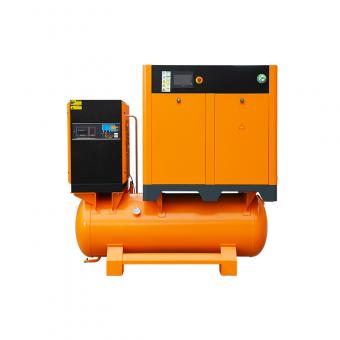
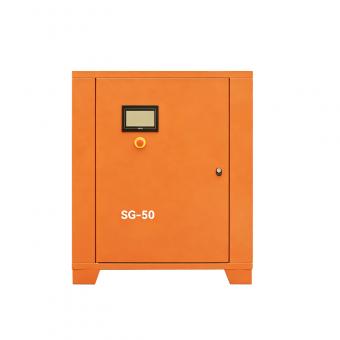
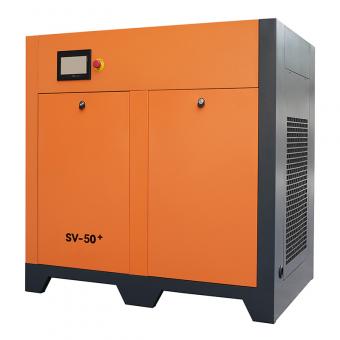
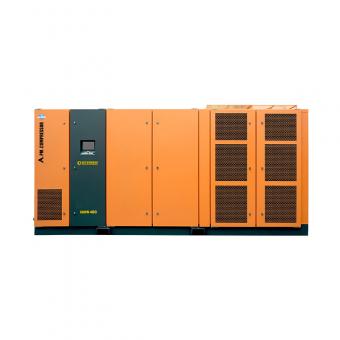
Huade Group ofrece una gama completa de compresores de aire de tornillo que cubren potencias de 5 HP a 480 HP, con opciones que incluyen configuraciones de velocidad fija, frecuencia variable (VSD) y sin aceite. Nuestros productos se exportan a más de 50 países y regiones de todo el mundo. Ya sea que se encuentre en la fase de selección o necesite mejoras técnicas, nuestro equipo de ingeniería proporciona evaluaciones gratuitas del sistema y soluciones personalizadas.



 IPv6 red compatible
 English
 français
 Deutsch
 русский
 español
 português
 日本語
日本語 한국의
한국의 ไทย
ไทย 中文
中文