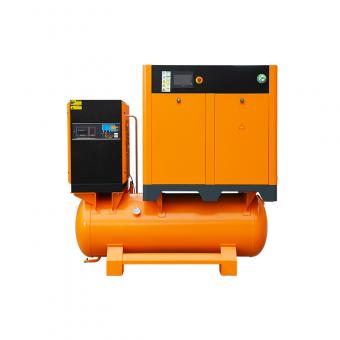
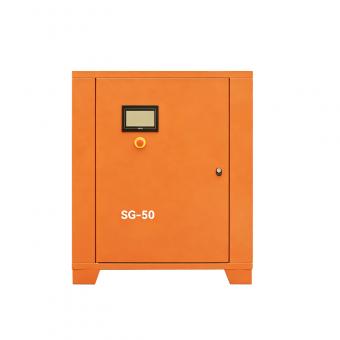
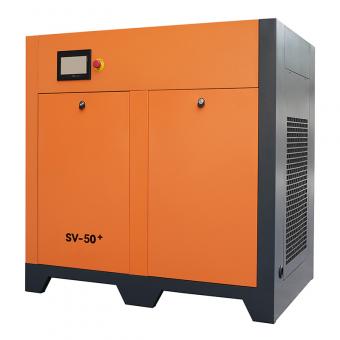
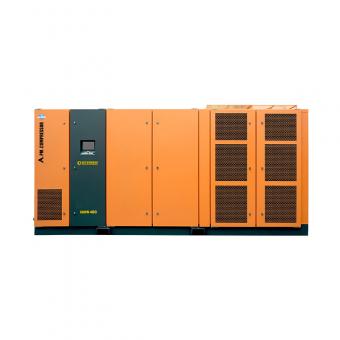
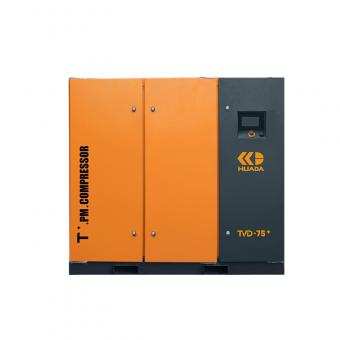
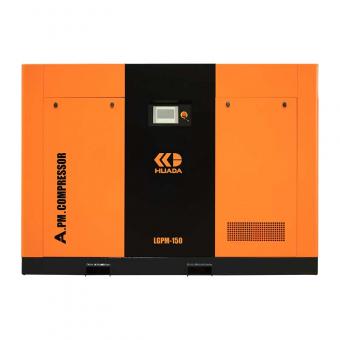
Como elemento clave de la energía industrial, seleccionar el modelo de compresor de aire adecuado no solo satisface las necesidades de producción, sino que también permite ahorrar energía a largo plazo. Estos 6 factores clave le ayudarán a elegir el equipo adecuado rápidamente.
-
Reservar una
10%-20%
margen para el caudal de aire (opte por un 20% si la distancia de instalación es larga o se pueden añadir equipos adicionales más adelante) para evitar "potencia insuficiente para las herramientas" o "desperdicio de energía debido a frecuentes ciclos de arranque y parada".
-
Calcule las pérdidas del sistema (p. ej., filtración, resistencia de la tubería) al determinar la presión de descarga. Si existe una diferencia de presión significativa entre los distintos equipos, será más rentable seleccionar compresores separados para cada uno.
Eficiencia energética = Potencia ÷ Caudal de aire, clasificada en tres grados:
-
Grado 1
:
(Internacionalmente avanzado): más eficiente energéticamente;
-
Grado 2:
Relativamente eficiente energéticamente;
-
Grado 3:
Nivel medio interno.
-
Modelos refrigerados por aire:
Adecuado para ambientes con buena ventilación y espacio limitado;
-
Modelos refrigerados por agua:
Ideal para escenarios de alto consumo de aire con buena calidad de agua.
-
Compresores con inyección de aceite
:
Consulte las normas nacionales;
-
Compresores sin aceite:
Consulte las normas internacionales;
-
No es necesario buscar la "pureza extrema": basta con satisfacer las necesidades de producción. Una purificación excesiva incrementará los costos.
Los tanques de almacenamiento de aire con capacidad superior a 1 metro cúbico se clasifican como equipos especiales. Verifique las certificaciones de producción del fabricante antes de seleccionarlos.
Más allá de la cobertura de la garantía, enfóquese en la puntualidad de la respuesta a fallas y en la profesionalidad de los servicios de mantenimiento para minimizar las pérdidas por tiempo de inactividad.




 IPv6 red compatible
 English
 français
 Deutsch
 русский
 español
 português
 日本語
日本語 한국의
한국의 ไทย
ไทย 中文
中文